

11TH Thermal and Fluids Engineering
Conference (Hybrid)
Conference (Hybrid)
In person at Arizona State University, Tempe, AZ, USA
And partially online virtual via Zoom and Whova
Dates: March, 9-12, 2026
And partially online virtual via Zoom and Whova
Dates: March, 9-12, 2026
Conference Program
Conference Program
Program2026.pdf (1.39Mb)
Conference_Program_ASTFE-TFEC-2026_draf_2-26-2026.xlsx (0.08Mb)
Plenary speakers

Suresh Garimella
University of Arizona
Matt Kaloupek
Archer-Daniels-Midland Company (ADM)
Amit Sharma
Tata Consulting Engineers LimitedKeynote speakers

Ernest Chua Kian Jon
National University of Singapore
Srinivas Garimella
Georgia Institute of Technology
Jay P. Gore
Purdue University
Herb Hayden
Southwest Solar Technology, LLC
Sung Jin Kim
Korea Advanced Institute of Science & Technology
Nenad Miljkovic
University of Illinois at Urbana-Champaign
Karma Sawyer
Pacific Northwest National Laboratory
Kyle Squires
Arizona State UniversityTEC Talk speakers
TEC Talk - Technology, Entrepreneurship, Communications
From idea to technology to product
TEC Talk is a series of short videos and presentations 15-20 minutes in length covering science, innovations and entrepreneurship for major topics on energy, water, environment and other forefront ideas.
TEC Talk is a series of short videos and presentations 15-20 minutes in length covering science, innovations and entrepreneurship for major topics on energy, water, environment and other forefront ideas.

Hadi Ghasemi
University of Houston
Amy Marconnet
Purdue University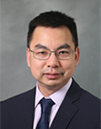
Xiulin Ruan
Purdue University
J. Rene Villalobos
FreshKube Inc.
Engineering Education: Perspectives from Industry Leaders and Academic Experts
This dynamic panel brings together top industry leaders and academic experts to explore how we can better prepare engineering graduates for real-world challenges. Attendees will gain firsthand insights from distinguished panelists:

Nicole R. Wesley
Manufacturing Engineering Manager, Caterpillar

Jared Olsen
Director of Launch and Execution Engineering, Stellantis (Chrysler)

Mostafa Abuseada
Senior Test Engineer, Tesla

James Middleton
Professor, Arizona State University
Panel on the Future of Thermofluids R&D
What are future directions for thermal and fluids engineering research? Where can our field have the greatest impact? Join this far-reaching discussion involving distinguished academic and industrial panelists to explore what might be the next big breakthroughs!

Zahid Ayub
Chief Technical Officer, Isotherm, Inc.

Andrew Maynard
Professor, Arizona State University

Ravi Prasher
Chief Technology Officer, Bloom Energy
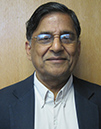
Ashwani K. Gupta
Professor, University of Maryland
Panel on the Funding Opportunities for Advancements in Thermal and Fluid Engineering
This panel brings together program leaders to provide insights into current and emerging funding opportunities relevant to the thermal and fluid engineering community. Panelists will discuss research priorities, proposal evaluation perspectives, and strategies for developing competitive submissions across fundamental, applied, and translational research programs. Attendees will gain practical guidance on aligning research ideas with agency priorities, understanding review criteria, and navigating common proposal challenges. The panel will begin with brief remarks from each panelist, followed by an open Q&A session designed to encourage interaction and discussion with conference participants.

Ronald D. Joslin
Program Director, U.S. National Science Foundation

Fangyu Cao
Acting Program Director, U.S. National Science Foundation

Jin Wen
Chair of ASHRAE's Research Administration Committee, Pennsylvania State University
Roundtable Discussions
Thursday, March 12th, 2026 – during luncheon
Fluid Mechanics Aspects of Flow Batteries
Sreenivas Jayanti
Professor, Department of Chemical Engineering, IIT Madras
Membrane Water Vapor Separations in HVAC and Industrial Applications
Andrew Fix
Assistant Professor, Department of Civil, Architectural, and Environmental Engineering, UT Austin
Thermal Energy Storage Systems
Saeed Tiari
Associate Professor & Chair, Biomedical Engineering Department, Widener University
Challenges and opportunities in two phase flow heat transfer
Hafiz Muhammad Ali
Director of Renewable Energy Laboratory Associate Professor of Mechanical Engineering, King Fahd University of Petroleum and Minerals
Challenges in Numerical Modeling of Heat and Mass Transfer in Frost and Ice
Arash Shad (ice)
CFD/Thermal Hydraulic Engineer, University of Florida
Mahsa Farzaneh (frost)
CFD & Thermal Systems Expert, University of Florida
Flow & Thermal Management in Data Centers
Bachir El Fil
Assistant Professor of Mechanical Engineering, Georgia Tech
Heat Exchangers
Kashif Nawaz
Section Head - Building Technologies Research, ORNL
Applications & Challenges of Supercritical Fluids
Jinglei Wang
Research Assistant, Zhejiang University
High-Temperature Heat Pumps
Mina Mikhaeel
Research, ORNL
Thermal Sensing and Control for Energy-Efficient Buildings
Fatih Evren
Senior Research Scientist, Pacific Northwest National Laboratory
Multifunctional Thermal Management Systems for Space Habitats
Ashok Ghosh
Associate Professor, Department of Mechanical Engineering, New Mexico Institute of Mining and Technology
Ethical Integration of AI into Research and Classroom Settings
Shyam Lunagariya
PhD, Data Science, Arizona State University
Writing Your First Proposal and How to Secure Funding
Bengisu Sisik
PhD Researcher, George Washington University
Murat Barışık
Professor, University of Tennessee
Finding Your First Tenure-Track Faculty Position
Tianyu Yang
Assistant Professor, School for Engineering of Matter, Transport and Energy, Arizona State University
Andrew Fix
Professor, University of Texas
ASTFE
Tel: +1 203 733 6275
Fax: +1 203 456 6167
© Copyright reserved ASTFE, 2026
www.astfe.org
American Society of
Thermal and Fluids Engineers
Fax: +1 203 456 6167
© Copyright reserved ASTFE, 2026
www.astfe.org