

12TH Thermal and Fluids Engineering
Conference (Hybrid)
Conference (Hybrid)
In person at Southern Methodist University, Dallas, TX, USA
And partially online virtual via Zoom and Whova
Dates: March, 14-17, 2027
And partially online virtual via Zoom and Whova
Dates: March, 14-17, 2027
3rd Annual ASTFE Thermal Hydraulics Competition: Process Heat Transfer Enhancement
Sponsored by Heat Transfer Research, Inc.
The contest for the 12th Thermal and Fluids Engineering Conference is open to all conference participants, provided at least one co-author is from industry. To encourage student participation, a team that includes at least one student as a co-author will have a 5% bonus added to their final score.
A process heat transfer enhancement method is primarily valued by how much it increases the heat transfer rate relative to the additional pumping power required to move the fluid through the system. Performance evaluations typically concern duty, Nusselt number, effectiveness, friction factor, and pumping power. A clearly defined performance evaluation criteria or thermal performance factor characterizes the benefit-to-cost ratio.
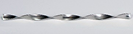
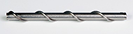


Late Professors Art Bergles and Ralph Webb categorized enhancement methods as passive or active (see table below), and compound enhancements may involve two or more techniques working in tandem.

Challenge: Prepare a technical report documenting the attributes (both positive and negative) and operating range of a process heat transfer enhancement device with some novelty in configuration or application. Use careful analysis, simulation, and/or experimental results to convince skeptics of the device’s value in the process industry. Discuss structural attributes for durability and commercial viability.
Evaluation and awards: A panel of international process heat exchanger experts from industry will evaluate the merits of each submission. The evaluation rubric is 25% description, performance impact, and novelty, 40% thermal-hydraulic analysis, 10% mechanical integrity, 10% commercial feasibility, and 15% documentation clarity.
Three submissions will be awarded cash prizes: first place, US$1500; second place, US$1000; and third place, US$500.
Passive
- Treated surfaces
- Rough surfaces
- Extended surfaces
- Displacement
- Swirl flow
- Coiled tubes
- Surface tension
- Fluid additives
Active
- Mechanical aids
- Surface vibration
- Fluid vibration
- Electric or magnetic fields
- Injection
- Suction
- Jet impingement
- By October 30, 2026:
-
- eMail kevin.farrell with the subject Process Heat Transfer Enhancement Competition and state your intention to participate.
- Submit a brief abstract via the ASTFE conference portal, selecting the subject area of Process Heat Transfer Enhancement Competition.
- By December 31, 2026:Submit a final technical report describing the process heat transfer enhancement and its performance to kevin.farrell. The report should consist of no more than 10 standard letter-sized, single-sided pages, including introduction, discussion, and summary sections. Use 1-in. margins and an 11-pt sans serif font.
- By ASTFE deadlines: Register and pay for conference attendance: Both in-person and virtual attendance options are available. The latter facilitates attendance with limited cost to the presenter.
Our ASTFE community looks forward to seeing your designs.
Thank you for your consideration,
Kevin Farrell, PhD, PE
Heat Transfer Research, Inc.
www.htri.net
ASTFE
Tel: +1 203 733 6275
Fax: +1 203 456 6167
© Copyright reserved ASTFE, 2026
www.astfe.org
American Society of
Thermal and Fluids Engineers
Fax: +1 203 456 6167
© Copyright reserved ASTFE, 2026
www.astfe.org